READING WATER FOR BETTER FLY FISHING SUCCESS
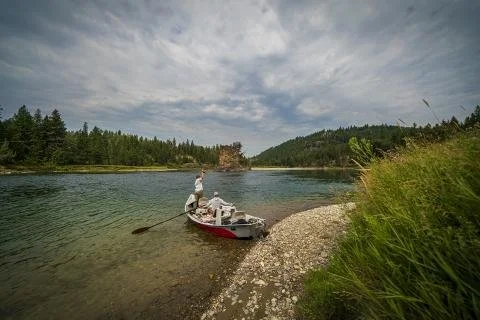
Tim Linehan and guest fly fishing on Montana’s Kootenai River
As you learn to fly fish you learn to read the rivers. Every river tells a story, and learning to read that story can turn your day of casting into a day of catching. In this three-part series, we'll explore the fundamental elements of river structure: riffles, runs, and pools. Each of these features plays a unique role in the river's ecosystem, and understanding them will enhance your ability to locate and catch trout.
I’ve covered the definition and characteristics of riffles and runs, and now I’ll cover pools.
To review, riffles are shallow areas generally flowing over coarser materials like gravel and often have a slight change in depth, and runs are areas of the river that offer generally quieter surface characteristics and uniform depth.
Pools are deeper still than runs, have quieter, flat surface characteristics, and whose bed load materials often consist of finer materials that have settled at the end of the riffle, run sequence by nature.
Pools offer refuge for trout in many ways. They are the deepest parts of the river and deeper water is safety for trout. Depth also offers the coldest water offering trout a healthy alternative during hot days and increased water temperatures. And the bottom of pools actually have significantly less current offering trout a true rest when needed.
Pools can hold large numbers of trout as well. Trout will often hold in pools, and move into riffles and runs to feed. If you’re not finding fish in riffles or runs, head for a pool. Trout will often be opportunistic while holding in pools. They may not actively be feeding, but if presented with a good meal, they’ll eat.
The other day I was floating with a client. We’d touched a few fish and I was pulling hard on the oars for over an hour while working a long, half mile run here on the Kootenai that usually offers good action in the morning. Not so much that day. I figured the trout were just slow to wake up. And then I slid into the pool.
The bottom dropped out and water depth went from three to twelve feet. And it was game on! Clearly trout were just laying back in the pool and not in the run actively feeding. But, they were not going to pass up an easy meal in soft current either. The takes were terrific. We could see the fish sliding with purpose from the depths and inhaling the big hopper. The hardest part was waiting for them to actually get the fly in their mouth since it’s easy to jump the gun when you see them coming.
Throughout the morning we had good action in the pools and very little action in riffles and runs.
Keep in mind pools offer refuge and rest for trout. If you’re not finding fish in riffles and runs, it’s a good bet they’re in the pools.
If you have any questions about this blog or if there’s anything else we can help you with give us a shout. 406-295-4872