FALL FISHING TACTICS
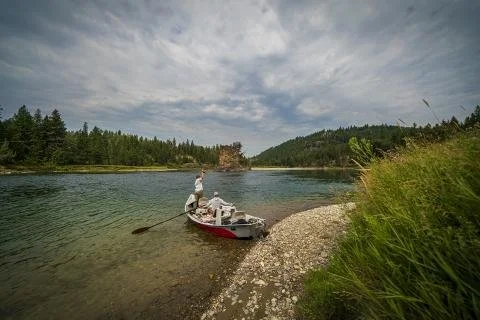
Tim Linehan and guest fly fishing on Montana’s Kootenai River
The other day I was floating the Kootenai with a client. As we approached a favorite run I told him to get ready. He snapped out a cast and we floated for about one hundred yards without even a sniff. At first I was surprised. Then I remembered I generally don’t find fish in that particular run much after August.
Trout will start to behave differently and inhabit different water types during the fall. Knowing where and when to look for feeding fish in the fall will help make your fall outings more productive.
While there are specific insect hatches associated with cooler weather and the fall, for the most part you can assume insect production is decreased significantly compared to the spring and summer months. What does this mean? It means that generally speaking trout will not spend as much time in riffles. If the food isn’t there, the trout will not be either.
Instead of stoneflies, caddis, and mayflies as primary food sources, terrestrials and midge provide more frequent daily food sources for trout during the fall. Terrestrials and midge can be found in more varied water types like runs and pools. Due to this dynamic, later in the season trout will spend more time in runs and pools.
As water temperatures decrease in the fall, trout may not be as active. Mornings can often be tight with minimal feeding activity. As the day warms and water temperatures with it, afternoons and evenings are often best late in the season.
Additionally, keep in mind in the fall water clarity can be exceptional. But that also means trout might be a bit spookier especially since they’ve likely been fished over throughout the season on most rivers and streams. Longer leaders and smaller tippets will definitely help catch more fish. Think at least ten feet to 5x depending on your fishery.
Later in the day I started concentrating on runs that were 3-6 feet deep with walking speed current. I’d changed flies to a size 12 red water walker. I pulled back on the oars, told my client to make thirty five foot cast to the 2 o’clock position since we were approaching a submerged log. He snapped out a great cast, his fly drifted for about ten yards and then a 15” Kootenai rainbow slid up from the log and slowly but surely at his fly. For the rest of the day we had good action in runs with the same water type.
Knowing how trout behavior changes in the fall and knowing how to adjust tactics accordingly will help pay dividends later in the season.
If you have any questions about this blog or if there’s anything else we can help you with give us a shout. 406-295-4872. And if you need gear or any Linehan Outfitting swag shop on-line here. https://linehan-outfitting.myshopify.com/.