STREAM DYNAMICS 101-RIFFLES
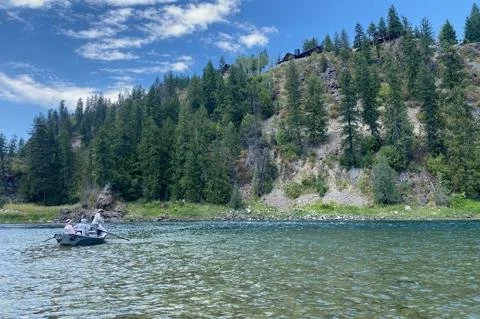
As you learn to fly fish you learn to read the rivers. Every river tells a story, and learning to read that story can turn your day of casting into a day of catching. In this three-part series, we'll explore the fundamental elements of river structure: riffles, runs, and pools. Each of these features plays a unique role in the river's ecosystem, and understanding them will enhance your ability to locate and catch trout.
Yesterday, I was floating with clients on the Kootenai River.
As we entered a fast run, I instructed them to snap their hoppers into the riffle in the middle of the river. When both of them made errant casts, falling short of the intended target, I realized they didn’t really understand where and what a riffle actually is.
Reading the water to help you catch more fish is actually easy. Here are a few simple rules with explanations of basic water types to help you focus more clearly on where trout are more likely to live.
Let’s start with riffles. Riffles are easy to identify and often the best place to concentrate your efforts. Riffles are areas of shallow water dropping in gradient, specifically below gravel bars. Most often, the average depths of riffles range between six inches and thirty inches, depending on the size of the river. Riffles are big insect producers because they are highly oxygenated. For this reason, fish inhabit riffles to feed.
The best way to fish a riffle is to start with the inside seam. The inside seam is the visible line of current where it runs against the flat water area with little or no current. Trout will often sit just inside the softer current and dart out to eat as food is transported down the seam by the faster current.
After you’ve worked the inside seam, start adding a foot or two to your cast and work new water by covering a different line until you’ve fished the approachable water available in the riffle area.
Riffles are easy to identify and often hold trout during all times of the day. By concentrating your fishing efforts in riffles, you are already increasing your odds of catching a few trout.
In the next part of our series, we'll have a look at reading runs—those smooth, deeper stretches of water that provide another prime habitat for trout. Stay tuned to learn how to approach and fish these critical areas of the river.